
Range is decided
at the joint.
Battery packs, lightweight housings and high-voltage components have turned fastening into an EV engineering discipline. We supply the light, electrochemically matched joints these programs demand.
Three joint problems every EV platform shares
Steel bolts on aluminum and magnesium housings galvanic-corrode; thermal cycling to 150 °C relaxes clamp load; and every gram of steel is range you paid for and lost. Our answer is to match the fastener to the substrate - electrochemically, thermally and structurally - instead of forcing a steel part to cope.
- ZT68 / 6056 aluminum bolts - steel-class strength at ~65% lower weight
- 6061 battery lifting sleeves - 98% material utilization, ~60% below full-CNC cost
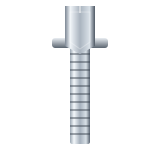
- Stabilized rivet bolts for trays and covers - single-side installation on closed sections
- Anodized and chromated finishes validated through 60-day salt-spray testing
From cell module to body structure
Battery packs & modules
6061 lifting sleeves and aluminum bolts give assemblers precise, reusable lifting and securing points that survive pack service life.
E-drive & lightweight housings
Bolts matched to aluminum and magnesium substrates - no white-rust staining, no thermal relaxation at operating temperature.
Sheet trays, covers & enclosures
Rivet nuts and rivet bolts add strong threads to thin sheet and closed profiles from one side.
The fasteners this sector asks for most
Aluminum alloy bolts
ZT68 7-series bolts with ≥615 MPa strength at a third of the weight of steel.
View familySleeves & custom parts
The 6061 EV lifting sleeve - and any cold-headed component you are currently machining.
View familyRivet nuts & bolts
Threaded points installed from one side for trays, covers and closed sections.
View familyEV fastening questions we hear most
ZT68 7-series aluminum reaches ≥615 MPa tensile strength - comparable to many steel 8.8 applications - while weighing about 65% less. With ≥8% elongation, joints stay tough rather than brittle, and 1.3-1.5d engagement keeps housings compact.
By matching the joint, not fighting it: aluminum bolts against aluminum and magnesium substrates remove the hostile potential pair, and anodized or chromated finishes add a stable surface layer - validated in 60-day salt-spray testing.
Yes. Our 6061 lifting sleeve began as a customer drawing that was being fully CNC-machined. We proposed a cold-heading-plus-machining route and cut the unit cost by roughly 60% at 98% material utilization. Send us yours.
Engineering an EV joint that steel makes too heavy?
Send us the substrate, loads and envelope - our engineers will propose the bolt material, finish and test plan to close it.