

Locking Thread Inserts for High-Vibration Rail and Powertrain Applications
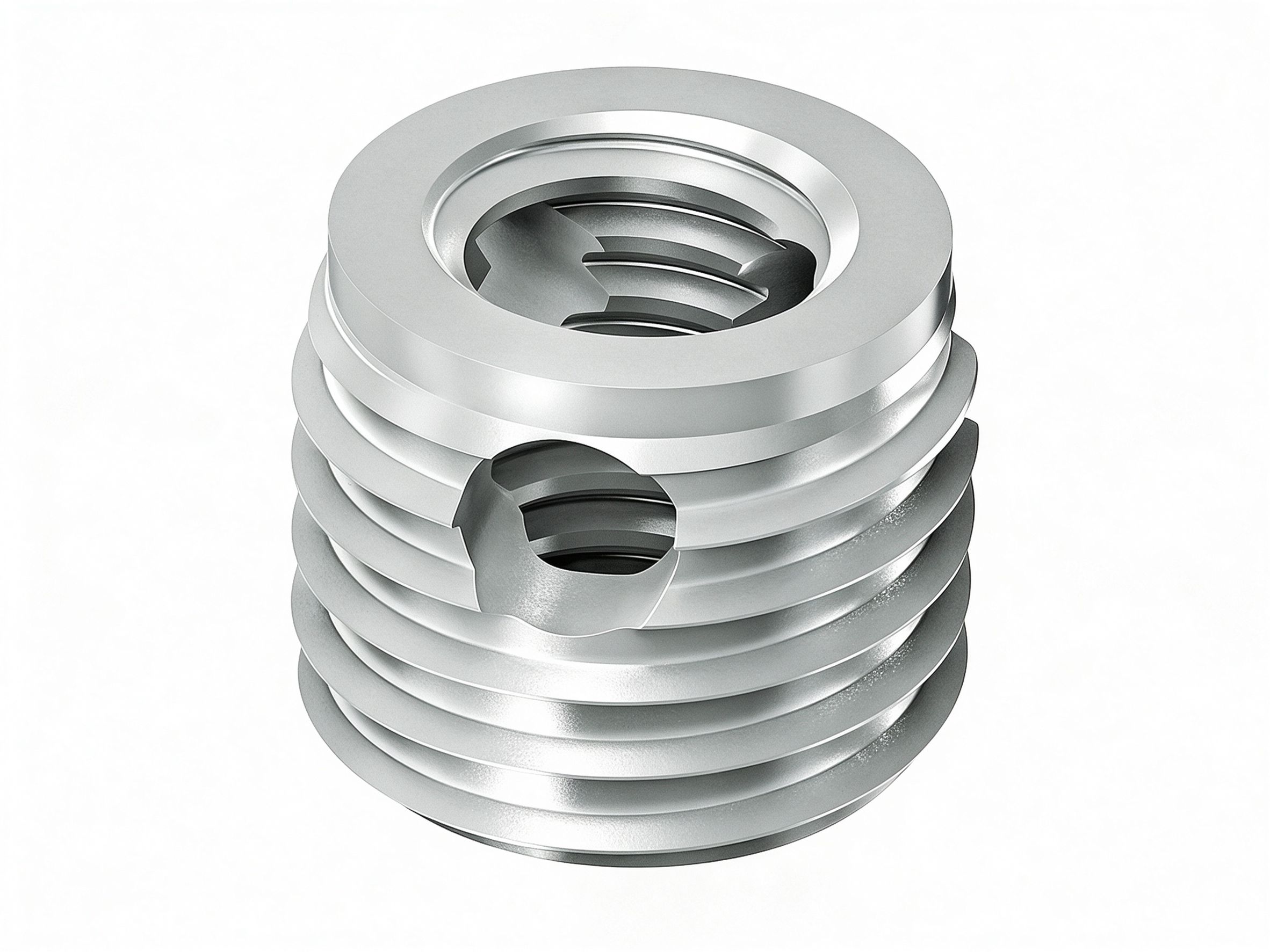
Rail traction gear, transmissions and engine brackets all share one enemy: transverse vibration that walks nuts and bolts loose. Locking thread inserts attack the problem inside the parent thread itself.
Bottom line: for most Anti-Loosening Series applications the decision comes down to load, environment and assembly method — the Anti-Loosening Series guide walks through the selection.
How the lock works
Unlike nyloc patches, which depend on polymer creep limits, a locking wire insert deforms elastically: one or more coil segments have reduced internal diameter, so the screw must be driven past a deliberate interference. The result is a prevailing torque that survives oil, 180 °C heat and dozens of reassemblies — and it is applied identically on bolt one and bolt five hundred.
Where it outperforms alternatives
- Versus thread-locking adhesive: no surface-prep dependence, no curing schedule, unlimited shelf life.
- Versus nyloc nuts: temperature ceiling rises from ~120 °C to the insert material limit.
- Versus lock washers: no damage to mating surfaces, and the lock survives disassembly.
Specify with a test, not a hope
Ask suppliers for transverse vibration test data (ISO 16130 or DIN 65151 style) at your clamp length. Toprecision locking inserts are validated with 20-assembly prevailing-torque windows, and we supply the test report with the PPAP file when the application warrants it.
Wire thread insert selection at a glance
| Insert type | Thread material | Best for | Temperature limit |
|---|---|---|---|
| Standard free-running | 304 stainless | General aluminum/ magnesium housings | ~300°C |
| Screw-locking (prevailing torque) | 304 stainless | Vibration-prone joints | ~300°C |
| Inconel X-750 | Inconel | Aerospace, engine hot zones | ~750°C |
| Keensert (solid bushing) | Steel/zinc-plated | Repeated assembly, heavy load | ~400°C |
Need wire thread inserts for your housing?
Toprecision supplies 304/316 stainless and Inconel X-750 wire thread inserts, plus keenserts and self-tapping inserts for aluminum, magnesium and die-cast housings. Send the housing material and thread size — we will supply the tap drill chart, installation torque and sample push-out test data. Request insert engineering support.