

Repairing Stripped Threads in Die-Cast Housings with Self-Tapping Inserts
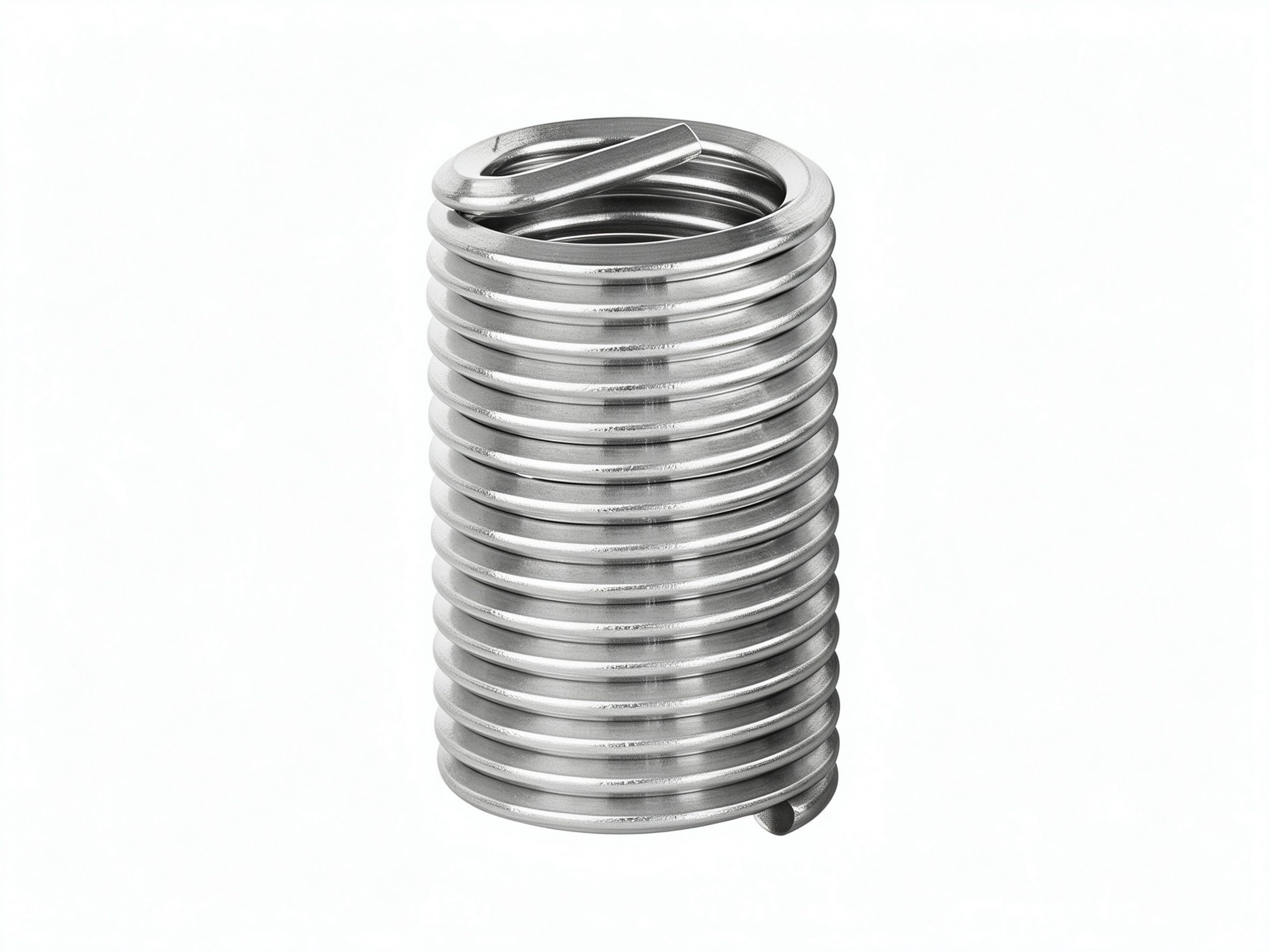
A stripped M8 boss on a die-cast gearbox cover used to mean scrap or a machining rework loop. Self-tapping inserts have changed that economics.
Bottom line: for most Light-Alloy Die Castings applications the decision comes down to load, environment and assembly method — the Light-Alloy Die Castings guide walks through the selection.
How the repair works
A self-tapping insert has an external cutting thread that taps the stripped hole to a slightly larger size while its internal thread remains to standard. Installation needs only a manual or electric driver with the correct mandrel — no tap set, no chips flying across the line, and cycle times measured in seconds.
When it is the right tool
- Field service and warranty repair where the part is already assembled on a vehicle or machine.
- Thin-walled die castings where heat from welding or helical re-tapping would distort the boss.
- High-volume rework stations: one mandrel, thousands of cycles.
Two cautions worth knowing
First, the pilot hole condition matters: fully collapsed threads should be drilled out to the insert pilot diameter rather than driven through blindly. Second, in abrasive or high-temperature environments, prefer 316 stainless or phospated carbon steel variants matched to the parent metal to avoid galvanic attack. Toprecision offers self-tapping inserts in M3–M12 with pull-out data on request, and we are happy to review a failed joint photo before you commit to a repair spec.
Wire thread insert selection at a glance
| Insert type | Thread material | Best for | Temperature limit |
|---|---|---|---|
| Standard free-running | 304 stainless | General aluminum/ magnesium housings | ~300°C |
| Screw-locking (prevailing torque) | 304 stainless | Vibration-prone joints | ~300°C |
| Inconel X-750 | Inconel | Aerospace, engine hot zones | ~750°C |
| Keensert (solid bushing) | Steel/zinc-plated | Repeated assembly, heavy load | ~400°C |
Need wire thread inserts for your housing?
Toprecision supplies 304/316 stainless and Inconel X-750 wire thread inserts, plus keenserts and self-tapping inserts for aluminum, magnesium and die-cast housings. Send the housing material and thread size — we will supply the tap drill chart, installation torque and sample push-out test data. Request insert engineering support.
Repair Cost vs Replacement
When a housing thread strips, the instinct is to replace the part — but a die-cast aluminum housing often costs $50–200 plus assembly labor. A wire thread insert repair costs under $5 in materials and 10 minutes of labor. For field service, carry a threaded insert repair kit with taps, inserts and installation tools sized for the most common thread sizes on your equipment. It pays for itself on the first repair.