

Keenserts vs Wire Thread Inserts: Choosing the Right Insert for Aluminum Housings
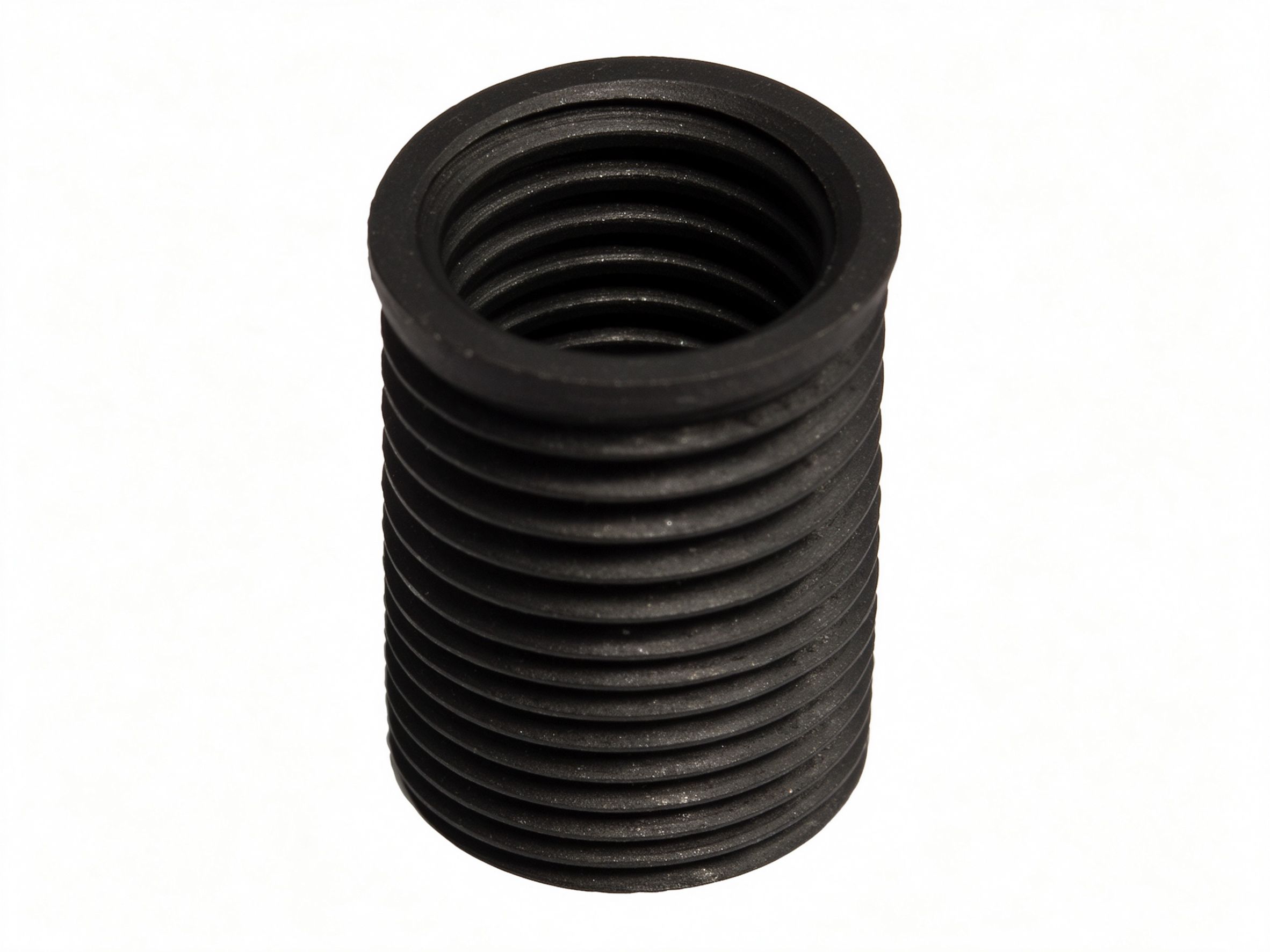
When a threaded hole in an aluminum or magnesium housing strips — or must never strip — engineers reach for an insert. The two dominant choices behave very differently.
Bottom line: for most Light-Alloy Die Castings applications the decision comes down to load, environment and assembly method — the Light-Alloy Die Castings guide walks through the selection.
Where wire inserts win
Coiled wire inserts distribute load across a long elastic thread and can even improve fatigue performance over a cut thread in aluminum. They need minimal wall thickness, install in seconds and cost little. For housings with adequate boss diameter and moderate torque, they are the default.
Where key-locking inserts win
Keenserts (keyed inserts) drive four locking keys into the parent thread, making the assembly resistant to both rotation-out and high over-torque. Choose them when:
- The boss wall is too thin for a full wire-insert thread pattern.
- The joint sees repeated disassembly, high shock, or service torque beyond 8.8 bolt capability in aluminum.
- A stripped hole must be repaired permanently without bosses or weld buildup.
A quick decision rule
Design for target bolt proof load and check the boss OD first: if a standard wire insert pattern fits, start there; if not, move to a key insert before thinning the casting. Toprecision stocks both families in inch and metric, and our application engineers routinely cross-check customer drawings against both systems before quoting.
Wire thread insert selection at a glance
| Insert type | Thread material | Best for | Temperature limit |
|---|---|---|---|
| Standard free-running | 304 stainless | General aluminum/ magnesium housings | ~300°C |
| Screw-locking (prevailing torque) | 304 stainless | Vibration-prone joints | ~300°C |
| Inconel X-750 | Inconel | Aerospace, engine hot zones | ~750°C |
| Keensert (solid bushing) | Steel/zinc-plated | Repeated assembly, heavy load | ~400°C |
Need wire thread inserts for your housing?
Toprecision supplies 304/316 stainless and Inconel X-750 wire thread inserts, plus keenserts and self-tapping inserts for aluminum, magnesium and die-cast housings. Send the housing material and thread size — we will supply the tap drill chart, installation torque and sample push-out test data. Request insert engineering support.
Cost Comparison: Keensert vs Wire Insert at Scale
For low-volume repair work, wire thread inserts are cheaper per piece — about $0.05–0.15 each in stainless. Keenserts run $0.30–0.80, but they eliminate the installation tool and the tang-breakoff step. At 10,000 pieces, the installed cost difference narrows: wire inserts need a $200 installation kit plus 30 seconds of labor per insert, while Keenserts install in 10 seconds with a standard hex socket. For production automation, Keenserts usually win on total cost despite the higher unit price.