

Self-Clinching Standoffs: Board Mounting Hardware for Sheet-Metal Chassis
Mounting a PCB inside a painted sheet-metal enclosure is a daily reality in electronics manufacturing. Self-clinching standoffs solve it with hardware that installs before painting and serves for the product's life.
Bottom line: for most Bonding Series applications the decision comes down to load, environment and assembly method — the Bonding Series guide walks through the selection.
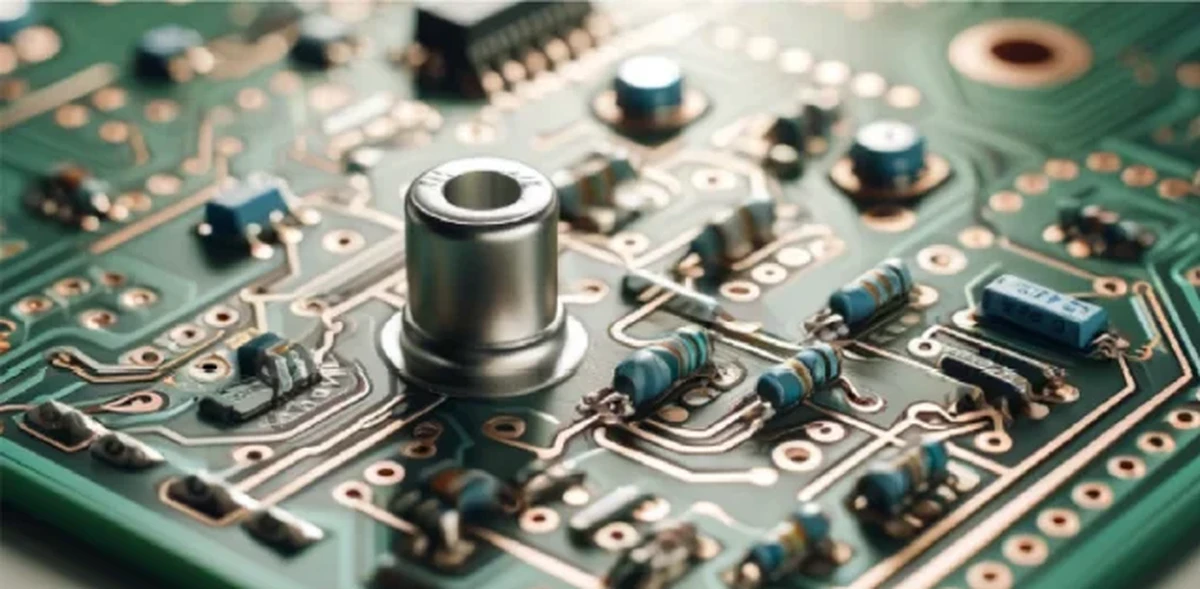
How the clinch works
The standoff's knurled or grooved shank enters a punched hole; press force squeezes surrounding sheet into an annular groove. The joint resists push-out and torque without welds or adhesives — and survives paint ovens better than any press-in plastic clip.
Selection details that matter
- Sheet hardness and thickness windows: each standoff size specifies minimum thickness and maximum hardness; ignoring the window is the root of most spin-out failures.
- Thread style: blind (closed) standoffs stop screws at a set depth; through-threaded ones accept variable screw lengths.
- Height tolerance: stack-ups between board and cover depend on it — specify ±0.1 mm classes where needed.
Install before powder coating, mask threads after
Coating in threads ruins assembly; masked threads or post-coat re-tapping restores them. Topprecision supplies clinch standoffs in steel and stainless with coating-masked threads standard, plus install-press die guidance so fabricators qualify the operation once.
SMT mechanical hardware comparison
| Component | Thread size | Reflow temp | Use |
|---|---|---|---|
| SMT threaded standoff | M2–M4 | 260°C peak | Board stacking, PCIe brackets |
| SMT spring contact | — | 260°C peak | Shielding, ESD grounding |
| SMT screw terminal | M2.5–M4 | 260°C peak | Power grounding, cable attachment |
| Press-fit (post-reflow) | M3–M5 | Post-assembly | Heavy current, service connections |
Need SMT-ready mechanical hardware?
Toprecision supplies SMT threaded standoffs, spring contacts and screw terminals in tape-and-reel packaging, rated for 260°C reflow profiles. Send the PCB thickness and pad layout — we will supply the recommended land pattern and pick-and-place spec. Request SMT hardware consult.
Standoff Pull-Out Test
Self-clinching standoffs fail by pulling out of the sheet, not by breaking. The pull-out force depends on sheet thickness and hardness: a 0.062" aluminum panel holds a #4-40 standoff at about 200 lbf. For higher loads, use thicker sheet or a threaded insert with larger footprint. Always test the actual sheet material — painted or coated panels reduce pull-out strength by 15–25% because the coating compresses.