

Cold Heading an EV Battery Lifting Sleeve: 98% Material Utilization, 5x Throughput, 60% Cost Down
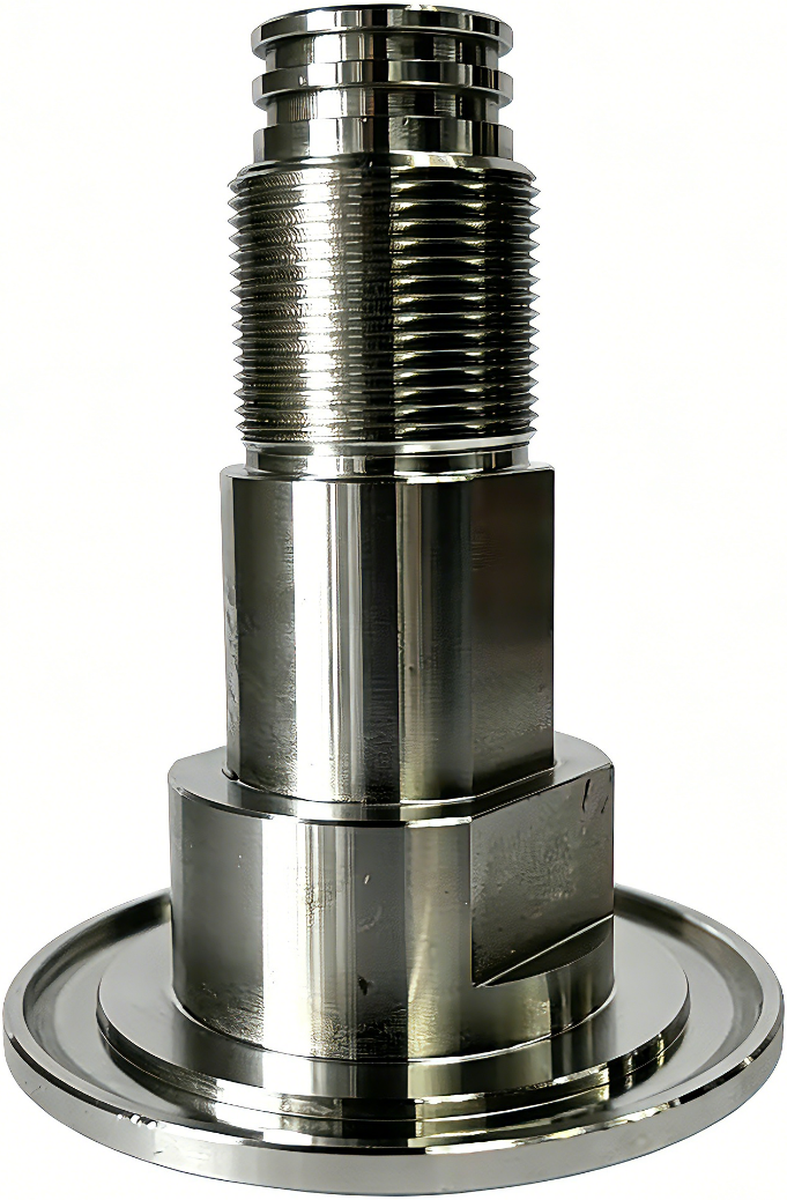
The aluminum 6061 lifting sleeve is a load-bearing structural part on every EV battery pack: it carries the pack during assembly, lifting and transit, and its flange-and-thread interface must hold under repeated cyclic loads. For years it was CNC-milled from bar stock — strong but expensive, slow and structurally weakened by cutting through the metal grain flow. Toprecision replaced that process with cold heading + minimal secondary machining, and the numbers changed the part economics entirely.
The short answer: cold heading forms the near-net blank in seconds with 98% material utilization, then only the top threads and seating faces get a light CNC finish. The result is a stronger part (grain flow preserved), 5x the daily throughput and a 60% unit-cost reduction — without adding equipment or floor space.
Why full CNC milling was the wrong process
Milling a flange-and-thread sleeve from solid 6061 bar has three structural and economic penalties:
- It cuts the metal grain flow. A machined part severs the continuous grain stream that cold deformation preserves, leaving weak points that initiate stress cracks under cyclic lifting load.
- Material waste is high. Bar milling removes roughly half the stock as chips, and each unit takes about 20 minutes on the machining center.
- Throughput is a bottleneck. A single line turns out roughly 60 units per day — too slow for high-volume EV battery pack production.
Cold heading + minimal machining: the composite process
The upgraded route has two stages, and the split between them is where the savings live:
- Cold heading blanking. High-pressure cold forming produces the integral flange-and-tube blank in a single blow — fast, consistent, with material utilization up to 98% and virtually zero scrap.
- Minimal precision machining. Only the top precision threads and the mating seating faces receive a light CNC finish, controlling flatness and thread engagement to EV assembly tolerances.
Measured results, not marketing claims
| Metric | Full CNC Milling | Cold Heading + Finish | Change |
|---|---|---|---|
| Material utilization | ~50% (chips) | ~98% | Near-zero scrap |
| Cycle time per unit | ~20 min | <4 min | 5x faster |
| Daily output (one line) | ~60 pcs | ~300 pcs | 5x throughput |
| Unit cost | RMB 50 | RMB 20 | -60% |
| Grain flow | Cut / weakened | Continuous / unbroken | Better stress-crack resistance |
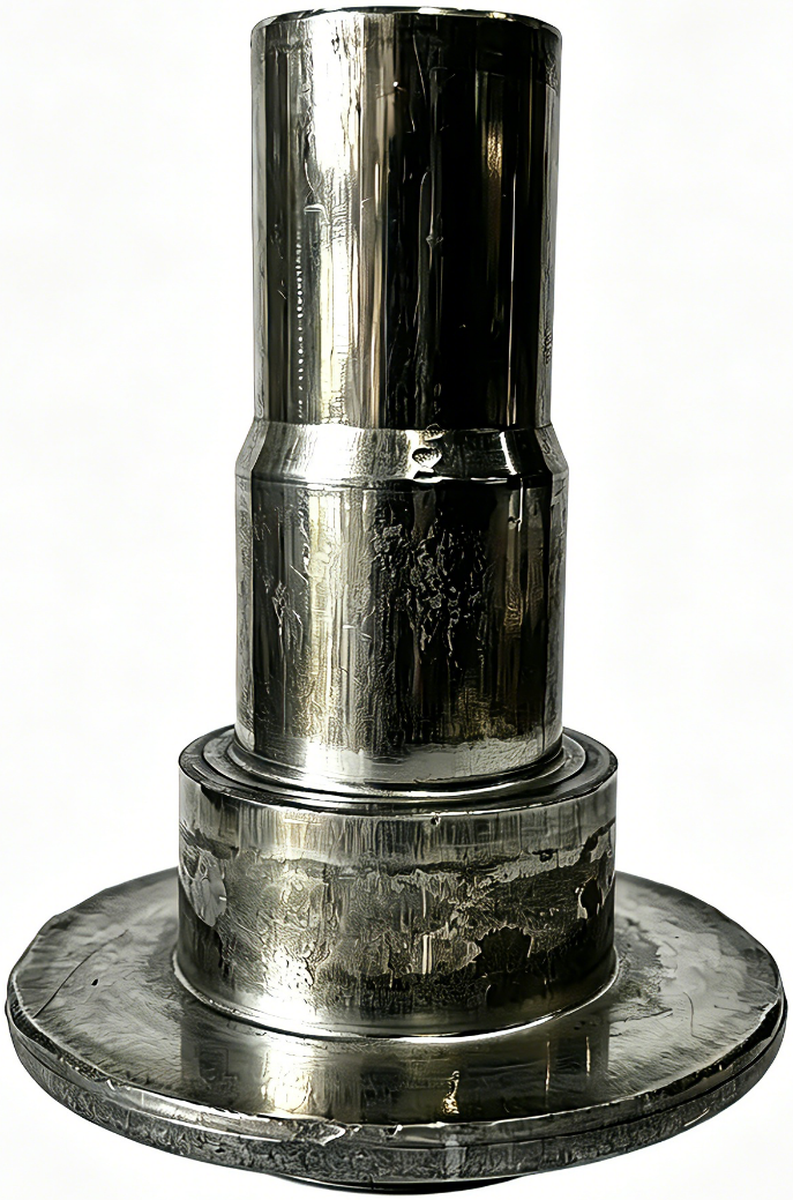
Why grain flow matters for a lifting sleeve
A lifting sleeve sees repeated tensile and bending loads every time a pack is hoisted. When CNC milling cuts across the grain, the remaining fibers are oriented randomly at the cut surface, creating initiation points for stress-corrosion and fatigue cracks. Cold heading deforms the metal plastically so the grain stream follows the flange and tube geometry continuously — the part is stronger in the direction it is actually loaded. Independent tensile testing confirms the cold-headed sleeve outperforms the fully CNC-machined equivalent in stress-crack resistance.
Who this is for
If you are designing EV battery pack assembly tooling, structural lift points or BOM-cost-optimized cast-aluminum housings, the cold-headed sleeve is a drop-in upgrade: same envelope, same thread spec, lower cost and longer fatigue life. Toprecision supplies these sleeves with high-strength aluminum alloy sleeves product line, supports new energy vehicle program tooling, and provides sample kits and tensile-test reports. Request a quote with your drawing for a cold-heading feasibility check within 1 day.