

ZT68 600 MPa Cold-Formed Aluminum Alloy Bolts: Solving Magnesium Alloy Fastening for EVs
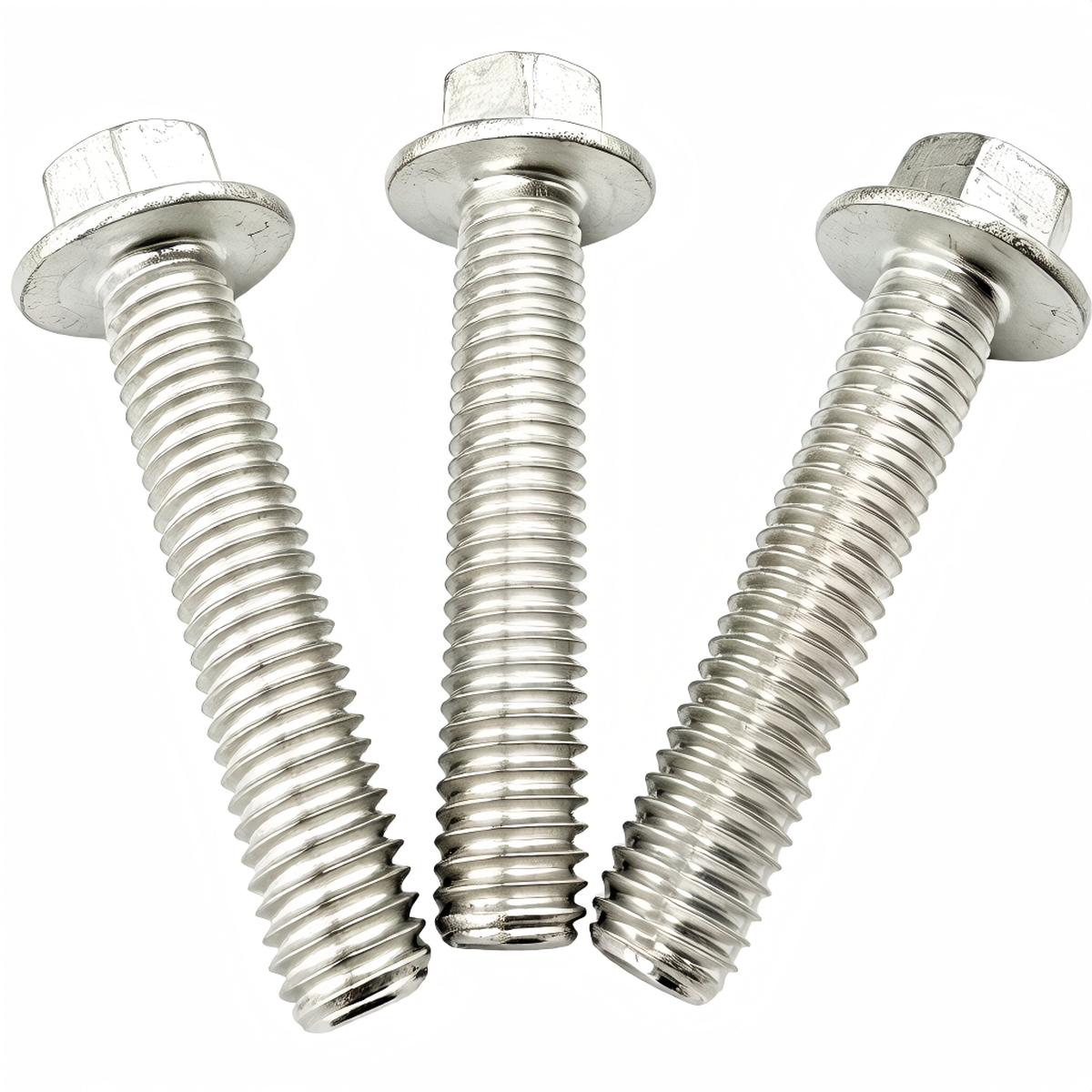
Magnesium alloy die-castings are now mass-installed in EV battery trays, e-drive housings and chassis components — the lightest structural metal available at two-thirds the density of aluminum. But the fastening of those magnesium parts has remained a bottleneck: conventional steel bolts trigger severe galvanic corrosion, and the widely used 6056 aluminum bolts (420 MPa) lack the strength for high-torque, heavy-load three-electric-system joints.
The short answer: a steel bolt in a magnesium housing corrodes because the electrode gap is more than a volt, and a 6056 bolt loosens because its thermal expansion does not match magnesium. The ZT68 600 MPa cold-formed high-strength aluminum alloy bolt was engineered specifically to close both gaps — and to match the mechanical demands of mass-produced EV lightweight structures.
Why conventional fasteners fail in magnesium structures
Two independent failure modes limit magnesium lightweighting, and both are triggered by the fastener itself:
- Galvanic corrosion at the dissimilar joint. Magnesium sits at roughly −1.6 V while carbon steel is around −0.44 V. In high-humidity, water-immersed or internally condensing environments, that gap drives a galvanic cell that corrodes the magnesium substrate and erodes internal threads — leading to leakage and structural failure.
- Thermal-expansion mismatch causes loosening. Magnesium expands at roughly twice the rate of carbon steel. Repeated temperature swings plus vibration from engine start-stop create differential deformation between the bolt and the magnesium housing, causing continuous preload loss, sealing failure, rattling noise and bolt loosening.
The market-standard 6056 (AL9) aluminum bolt at 420 MPa only marginally reduces the corrosion gap. Its mechanical strength and load-bearing capacity are insufficient for the high tightening torque, heavy load and long service life demanded by EV three-electric systems.
ZT68 vs 6056: measured performance comparison
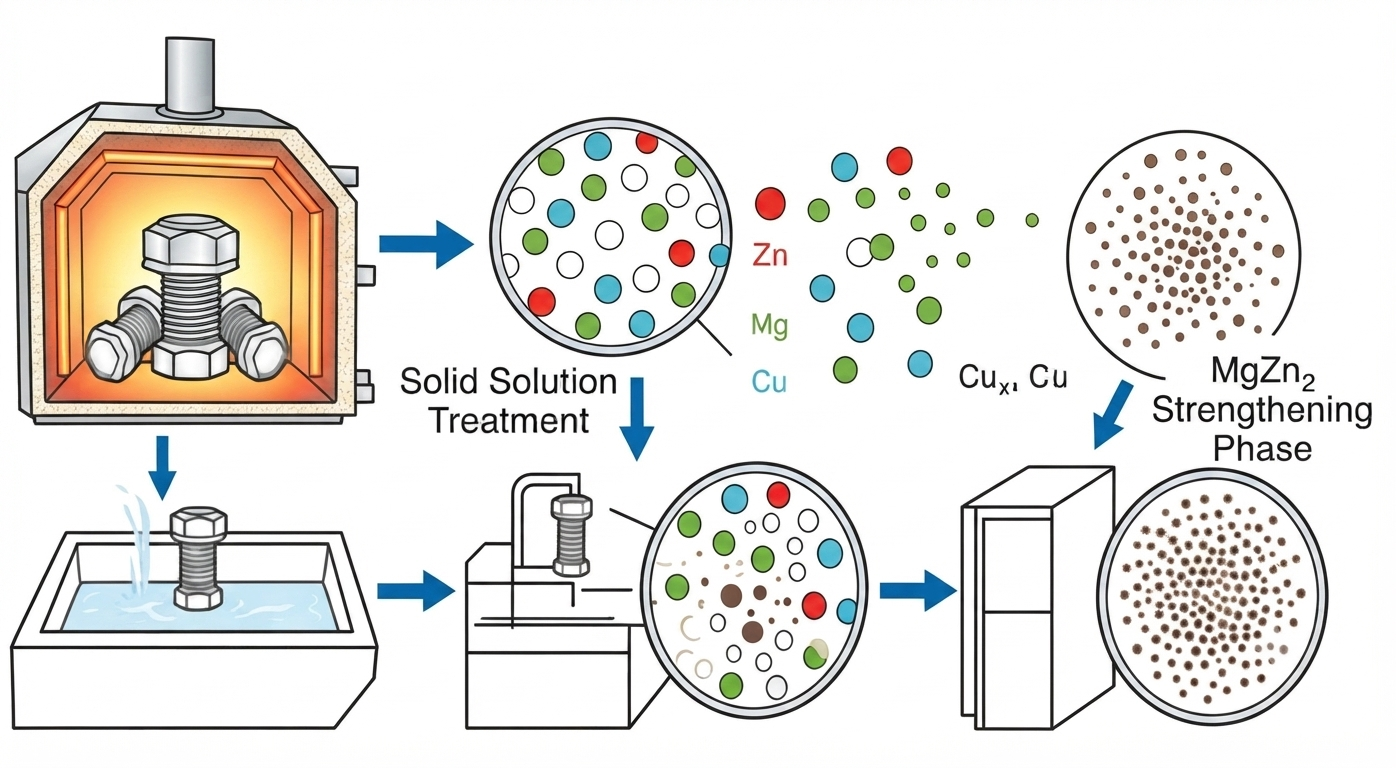
All figures below are benchmarked on standard M8×40 hexagon flange bolts. The ZT68 is a self-developed modified aluminum alloy produced by full-process cold forging — not a machined bar.
| Performance Indicator | ZT68 600 MPa Aluminum Bolt | Industry 6056 (AL9) 420 MPa | Improvement |
|---|---|---|---|
| Ultimate Tensile Strength (Rm) | ~630 MPa | ~420 MPa | ~+50% |
| 0.2% Proof Strength (Rp0.2) | ~500 MPa | ~350 MPa | ~+43% |
| Yield-to-Tensile Ratio | ~0.8 | ~0.85 | Higher plastic margin |
| Elongation at Break | ≥8% | ≥6% | Strength + ductility balance |
Four engineering advantages that matter in production
1. Electrode-potential matching eliminates galvanic corrosion. The ZT68 alloy's electrode potential aligns closely with magnesium, removing the corrosion risk inherent to steel fasteners. It passes intergranular corrosion testing and, paired with a proprietary anodizing treatment, withstands 60 consecutive days of neutral salt spray — suitable for high-humidity e-drive assemblies and battery packs.
2. Synchronized thermal deformation prevents loosening, leakage and noise. Its coefficient of thermal expansion closely matches magnesium, so the bolt and housing deform together under thermal cycling. Preload attenuation drops sharply, fundamentally eliminating bolt loosening, assembly leakage and rattling — directly improving NVH and structural reliability.
3. Consistent friction enables automated assembly. A proprietary triple-stage lubrication system holds the friction coefficient between 0.09 and 0.15, delivering stable tightening torque with low scatter for fully automatic assembly lines. Every bolt is cold-forged in-house with full traceability of production records — not batch-machined from bar stock.
4. Low density extends range by 6–8%. At 2.7 g/cm³, mass integration of ZT68 bolts reduces vehicle fastening weight versus steel, contributing a measured 6–8% cruising-range improvement — aligned with NEV lightweighting and energy-consumption targets.
Where ZT68 bolts are deployed
Custom-engineered for magnesium and aluminum lightweight structures in new energy vehicles, the ZT68 withstands thermal cycling, high-frequency vibration and humid corrosive environments. Primary applications:
- Electric drive systems — fastening joints for magnesium motor housings, reducer flanges and ECU enclosures.
- Power battery systems — structural connections for magnesium battery trays, pack frame borders and water-cooling plates.
- Lightweight chassis components — magnesium-aluminum control arms, steering knuckles and subframes.
- Large magnesium die-castings — instrument-panel frames and large lightweight interior structural castings.
For design engineers specifying ultra-high-strength aluminum bolts or solving magnesium galvanic corrosion on an EV platform, the ZT68 is available with sample kits, Junker-style vibration data and salt-spray reports. Contact Toprecision engineering to validate a joint before committing to full production — rapid samples within 1 day, full cold-forging traceability, and a dedicated magnesium-fastening design service.