

SMT Spring Elements: Board Retention, Shielding Contact and ESD Grounding
Among SMT hardware, spring elements are the quiet workhorses — they clip boards, press EMI shields into contact and ground chassis to PCB without a single screw after assembly.
Bottom line: for most SMT Fasteners applications the decision comes down to load, environment and assembly method — the SMT Fasteners guide walks through the selection.
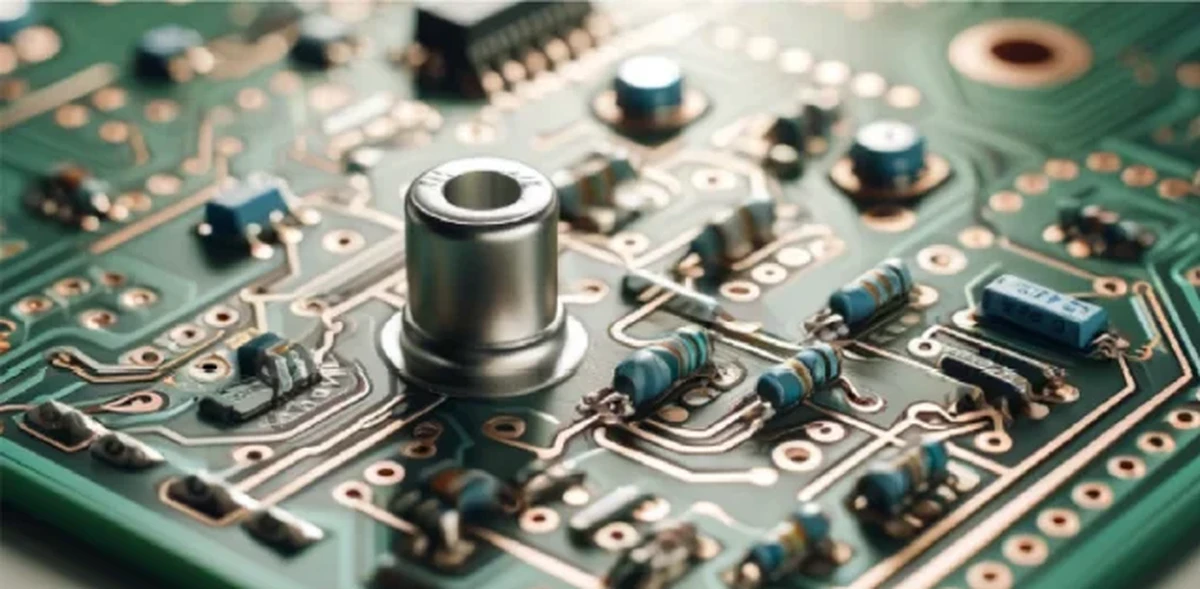
Three functional roles
Board retention springs replace plastic clips that fatigue; a phosphor-bronze spring rated for 5,000 insertions keeps its force. Shield-contact springs maintain the ground path between can and PCB where solder rings cannot flex. ESD grounding springs bleed static from chassis to ground plane, sized for both contact force and current path under fault conditions.
Geometry decisions
- Deflection window: design travel so the spring sits mid-range at nominal build, tolerating ±0.3 mm stack-up without bottoming.
- Contact finish: gold over nickel for low-voltage signals; tin plating suffices for chassis ground.
- Foot pattern: wide, coplanar feet resist the tombstone effect during placement.
Validate by force, not feel
Measure spring force at installed height, after reflow, and after thermal cycling — plating and temper shift. Topprecision supplies SMT spring elements with force-deflection curves per lot and will custom-tune rates for stack-up tolerances on request.
SMT mechanical hardware comparison
| Component | Thread size | Reflow temp | Use |
|---|---|---|---|
| SMT threaded standoff | M2–M4 | 260°C peak | Board stacking, PCIe brackets |
| SMT spring contact | — | 260°C peak | Shielding, ESD grounding |
| SMT screw terminal | M2.5–M4 | 260°C peak | Power grounding, cable attachment |
| Press-fit (post-reflow) | M3–M5 | Post-assembly | Heavy current, service connections |
Need SMT-ready mechanical hardware?
Toprecision supplies SMT threaded standoffs, spring contacts and screw terminals in tape-and-reel packaging, rated for 260°C reflow profiles. Send the PCB thickness and pad layout — we will supply the recommended land pattern and pick-and-place spec. Request SMT hardware consult.
Spring Elements for EMI Shielding
SMT spring contacts double as EMI gaskets when placed between the chassis and PCB. Choose beryllium copper springs for highest conductivity (5–10 dB attenuation). Phosphor bronze works for less demanding shielding. The spring must maintain contact pressure across the entire frequency range — below 100 kHz, contact resistance matters; above 1 GHz, the spring geometry and length-to-wavelength ratio control attenuation.